How Furniture Brands Can Scale Product Imagery Without Losing Consistency
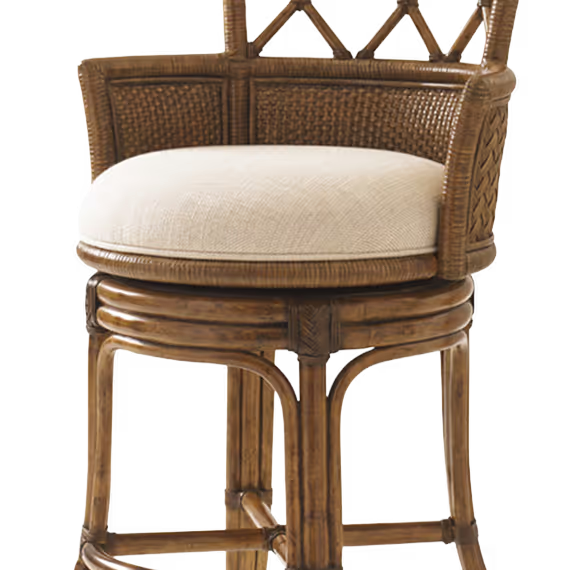
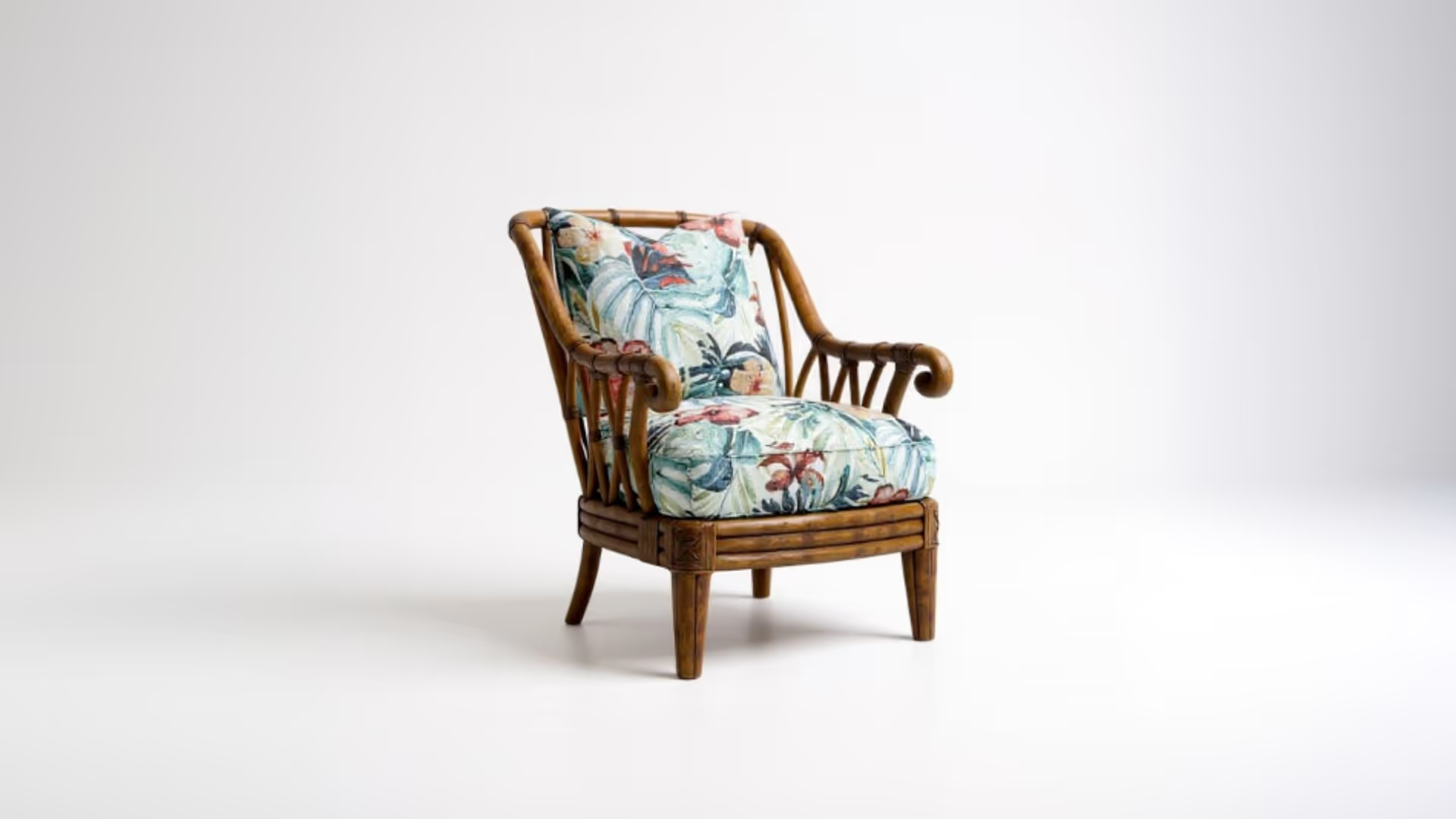
High-quality product silo images are essential for ecommerce, marketplaces, catalogs, and digital marketing. But producing consistent visuals for every product variant quickly becomes slow, expensive, and difficult to scale.

Furniture brands today are expected to present thousands of product combinations across ecommerce, marketplaces, and retail channels. Every fabric, finish, size, and configuration multiplies the number of required visuals, and each of those images must meet the same standard of quality and accuracy. A single product line can quickly expand into hundreds or even thousands of image variations when you account for all available options and the need to support multiple sales channels. Traditional photography workflows were never designed for this level of scale. Shooting every variation is not only expensive, but also slow and difficult to manage. Even when brands attempt to streamline the process, inconsistencies inevitably appear between sessions. Lighting shifts, styling changes, and subtle differences in composition create a fragmented visual experience that becomes noticeable across a full catalog. Many brands turn to AI tools to speed things up, but without a structured system behind them, these tools often generate images that look convincing individually while failing to stay consistent across the entire product range. The challenge is no longer just producing images. It is producing them at scale while maintaining control.

A 3D-based content workflow introduces that control by replacing disconnected tools with a single, structured system for image generation. Instead of relying on approximations, every visual is built on real product data, including accurate dimensions, materials, and configurations. This ensures that products are always represented correctly, whether they are shown as silo images or placed within lifestyle scenes. A chair will always align naturally with a table. A sofa will always sit proportionally within a room. Lighting setups, camera angles, and styling rules can be defined once and applied consistently across every output, eliminating the variability that comes with traditional photography or uncontrolled AI generation. Because everything is generated from the same source of truth, brands can maintain a cohesive visual identity across all channels, from their own ecommerce site to retail partner platforms and marketing campaigns. This level of consistency is not just a visual improvement. It directly impacts customer trust, reduces confusion, and supports a smoother buying experience.

With this foundation in place, scale becomes a built-in capability rather than a limitation. Instead of producing images one by one, brands can generate entire sets of visuals in batch, covering every fabric, finish, and configuration automatically. What once required weeks of coordination between photography, editing, and marketing teams can now be completed in a fraction of the time. The same system can also be used to create lifestyle scenes, campaign assets, and channel-specific content without additional production effort. This opens the door to faster product launches, more complete catalogs, and the ability to respond quickly to market demands or retail requirements. Rather than being constrained by content production, brands gain the flexibility to expand their offerings and improve their digital presence with confidence. In this model, content is no longer a bottleneck. It becomes a scalable, repeatable process that supports growth across ecommerce, marketplaces, and retail environments.
Related posts
Interested in our solutions?